Calcudoku: Fill Every Grid with Math and Logic
Calcudoku is a puzzle game that brings math and logic together in a clean and satisfying way. Your goal is to fill squares of different sizes by following specific mathematical rules, which turns every board into a thinking challenge that depends on both accuracy and reasoning. The concept is easy to grasp at first, but the deeper appeal comes from the way each move affects the rest of the puzzle. That balance makes the game feel smart, structured, and rewarding without needing flashy mechanics.
What makes Calcudoku stand out is the combination of number placement and rule based problem solving. You are not simply entering numbers wherever they fit. You need to understand how each section of the board works, respect the given mathematical conditions, and keep the entire grid consistent as you move forward. This creates a puzzle flow that feels more deliberate than a simple number game, because every choice needs to support the larger solution.
Calcudoku is a strong option for players who enjoy brain training, logical thinking, and calm but engaging challenges. It offers the kind of experience that can feel relaxing on the surface while still pushing your concentration and decision making. For players who like puzzles with clear rules and satisfying solutions, this game provides a clever and enjoyable way to spend time.
Quick Summary
• Puzzle gameplay that combines math and logic in one grid based challenge
• Fill squares of different sizes by following specific mathematical rules
• Requires careful reasoning instead of random number placement
• Offers a strong mix of brain exercise and satisfying puzzle solving
• A clear and engaging format for players who enjoy thoughtful challenges
Categories
Educational / Brain & Logic / Puzzle / Kids / Math
What is Calcudoku?
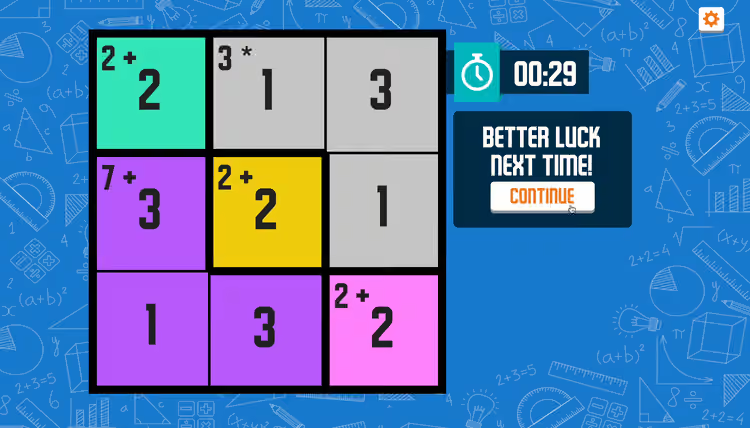
Calcudoku is a browser puzzle game where players solve number based challenges by filling a grid according to mathematical rules. The main objective is to place values correctly while making sure each part of the board follows the conditions given by the puzzle. This gives the game a very clear structure, which makes it approachable for players who enjoy organized logic games and number based problem solving.
The real appeal comes from how it blends arithmetic thinking with broader puzzle logic. A good solution is not only about knowing simple math. It also depends on understanding how the full board interacts. Because different sized sections must be solved within a shared grid, players need to think carefully about possible values, rule conflicts, and the most efficient way to narrow down answers. That makes each finished puzzle feel earned.
Calcudoku is especially suitable for players who enjoy games that make them slow down and think. It works well as both a fun mental challenge and a more focused logic exercise. Since the concept is based on clear rules rather than fast action, it can also appeal to players who prefer steady, thoughtful gameplay over reflex based difficulty.
How to Play Calcudoku?
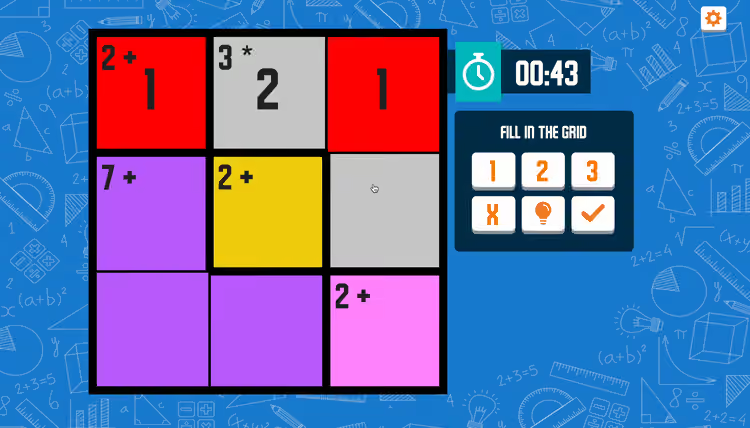
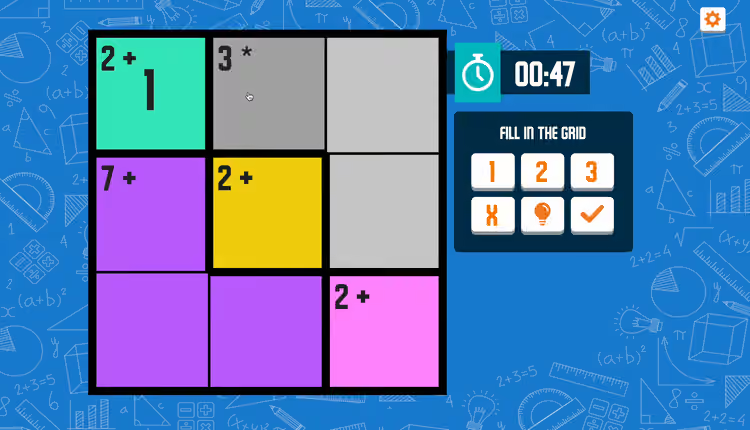
In Calcudoku, your task is to fill the grid correctly by following the mathematical rules assigned to different groups of squares. To solve the puzzle, you need to look at the board carefully, think about how the sections interact, and place the right values without breaking the logic of the grid.
• Examine the grid and identify the grouped squares
• Read the mathematical rule connected to each section
• Fill the empty squares with values that satisfy the given conditions
• Make sure your choices stay consistent across the full board
• Complete the puzzle by solving every section correctly
Calcudoku Strategies
• Start with the smallest or most restricted groups
Sections with fewer squares or tighter conditions often reveal useful values early and make the rest of the grid easier to read.
• Use the grid to eliminate impossible answers
If one value clearly fits better in a row, column, or section, that can help remove weaker options from nearby spaces.
• Solve group rules together with board logic
A section may look simple by itself, but the best answer usually comes from checking how it affects the surrounding squares too.
• Return to difficult areas after making progress elsewhere
A grid often becomes clearer once other values are placed, so stepping away from one stubborn group can save time.
• Focus on consistency over speed
Calcudoku rewards careful reasoning, and a clean logical approach usually works better than rushing into number guesses.
Controls
PC
Use the mouse to select a square and enter the correct value based on the puzzle rules.
Careful input helps you keep the grid clean and avoid unnecessary mistakes.
Mobile
Tap a square on the screen and enter the value that fits the rule of that section.
Precise touches make it easier to manage the board and solve the puzzle clearly.
Discover Similar Games on Pixidus
• Educational games that turn number practice into interactive play
• Brain & Logic games built around deduction and careful reasoning
• Puzzle games with structured rules and satisfying solutions
• Math games that make calculation and logic feel more engaging
Frequently Asked Questions
• Is Calcudoku only about math?
No. Math is an important part of the puzzle, but logical deduction is just as necessary to solve the grid well.
• Do I need to fill the whole board correctly?
Yes. The puzzle is completed by solving every section and keeping the full grid consistent.
• Is Calcudoku good for brain training?
Yes. It combines number work, logical thinking, and careful decision making in one challenge.
• Is it suitable for younger players?
Yes. Players who enjoy math and structured puzzles can find it approachable, especially when they already know basic arithmetic.
• Does Calcudoku feel more relaxing or more intense?
It usually feels calm and thoughtful, but the puzzle solving can still become very absorbing as the board gets more complex.
0 Comments
Please sign in to leave a comment
No comments yet